
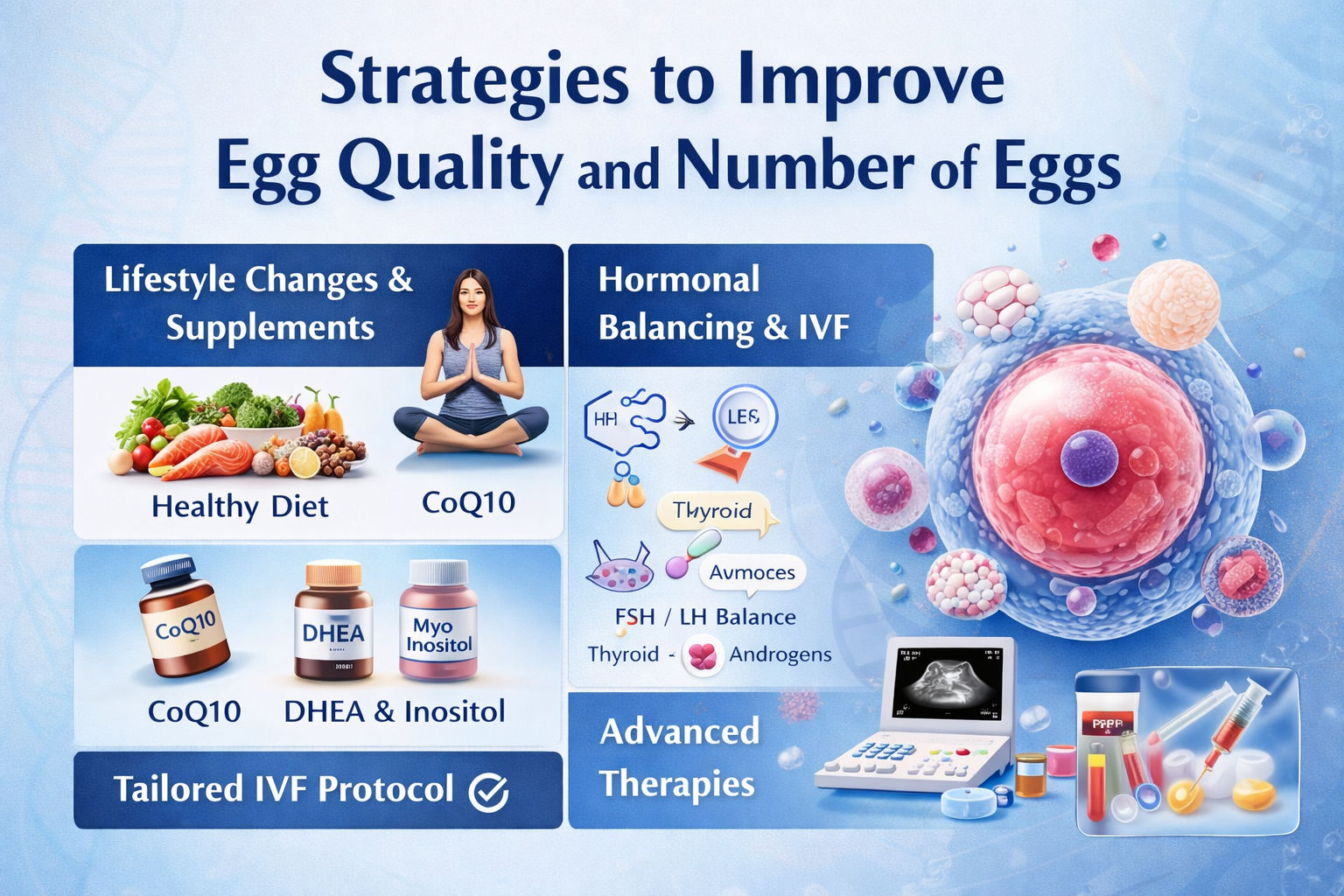
Improving egg quality and increasing the number of eggs retrieved is a key goal in fertility care—especially for women with low ovarian reserve, advanced reproductive age, or previous poor IVF response. While age remains the strongest determinant, several modifiable medical and lifestyle strategies can significantly optimize outcomes.
1. Understanding the Difference
- Egg number depends mainly on ovarian reserve (AMH, AFC).
- Egg quality depends on chromosomal integrity, mitochondrial health, and hormonal environment.
👉 We can’t create new eggs, but we can protect and optimize the existing ones.
2. Lifestyle Strategies (Foundation of Egg Health)
✔ Nutrition
- High-protein, anti-inflammatory diet
- Include: leafy greens, berries, nuts, seeds, eggs, fish
- Reduce: processed food, sugar, trans fats
✔ Weight Optimization
- BMI 19–25 is ideal
- Both obesity and underweight reduce egg quality
✔ Avoid Toxins
- Stop smoking & alcohol
- Limit plastics (BPA), pesticides, heavy cosmetics
✔ Sleep & Stress
- 7–8 hours sleep
- Yoga, meditation, breathing exercises
- Chronic stress increases oxidative damage to eggs
3. Supplements That Support Egg Quality
(Always under medical supervision)
- CoQ10 (Ubiquinol) – improves mitochondrial energy → better egg quality
- DHEA – may improve egg yield in low AMH
- Myo-inositol – improves oocyte maturity (especially in PCOS)
- Omega-3 fatty acids – anti-inflammatory, supports follicular fluid
- Vitamin D – improves ovarian response
- Antioxidants (C, E, melatonin) – reduce oxidative stress
⏳ Best started at least 8–12 weeks before IVF.
4. Hormonal & Medical Optimization
- Correct thyroid disorders
- Treat hyperprolactinemia
- Optimize FSH–LH balance
- Mild androgen priming (selected cases) can improve follicle recruitment
5. IVF-Specific Strategies to Increase Egg Number
- Individualized stimulation protocols
- Higher gonadotropin dose when indicated
- Dual stimulation (DuoStim) – two egg collections in one cycle
- Estrogen or androgen priming
- Careful trigger timing to maximize mature eggs (MII)
- Ovarian PRP – may improve follicular activity
- Growth hormone – may enhance oocyte competence
- Experimental regenerative therapies – under research protocols
7. Key Take-Home Messages
- Egg quality matters more than quantity
- Improvements take time (2–3 months)
- Combination of lifestyle + supplements + tailored IVF protocol works best
- Early intervention gives better outcomes
🌱 Final Thought (For Patients)
“You don’t need perfect eggs. You need one healthy egg—and the right environment for it to grow.”