A simple, powerful message for hopeful hearts
Let’s start with one clear truth: the uterus is not just an organ, it’s an environment.
And just like any environment, when conditions are right, life flourishes.
In fertility treatment, one small but crucial factor often makes a big difference—endometrial thickness. Think of the endometrium as the soil. Even the best seed cannot grow in dry or unhealthy ground. Our goal is simple: create the best possible soil for implantation.
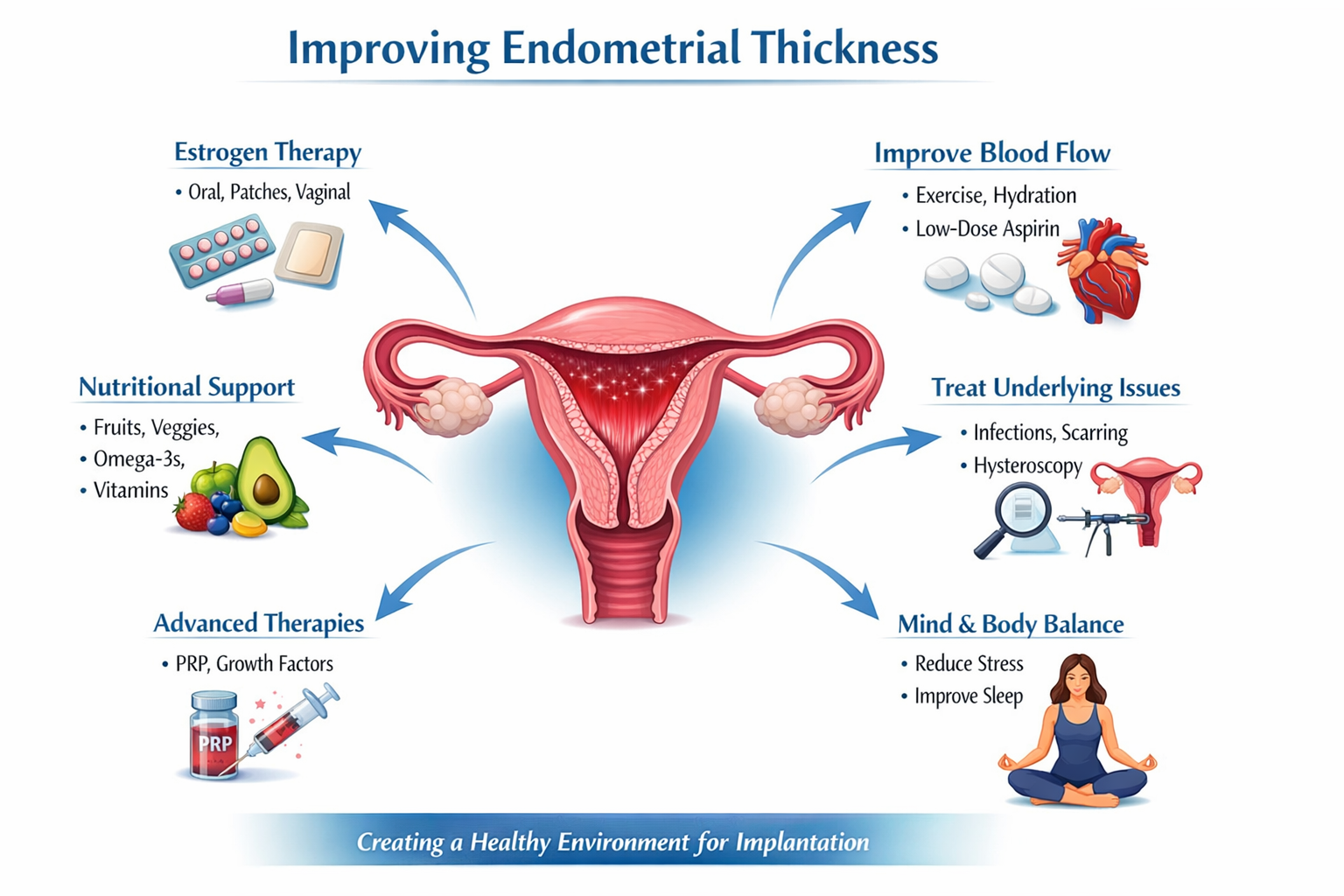
1. Estrogen: The Architect of Growth
Estrogen is the hormone that builds the endometrium. If levels are low or the uterus is not responding well, the lining may stay thin.
Doctors may prescribe oral tablets, vaginal estrogen, or estrogen patches—not randomly, but thoughtfully, based on how your body responds. The key is not more medicine, but the right medicine in the right way.
2. Blood Flow: Where Life Begins
A thick lining needs good blood supply. Poor uterine blood flow is one of the most common hidden reasons for thin endometrium.
Simple steps can make a real difference:
- Regular walking or light exercise
- Adequate hydration
- Avoiding smoking and excessive caffeine
In some cases, medications like low-dose aspirin or vasodilators are used to improve uterine circulation. Better blood flow means better oxygen, better nutrients, and a more welcoming lining.
3. Nutrition: Fuel the Foundation
Your uterus listens to what you eat.
A diet rich in:
- Green leafy vegetables
- Fruits with antioxidants
- Nuts, seeds, and healthy fats
- Adequate protein
supports hormonal balance and tissue growth. Certain supplements—when advised by your doctor—can help improve cellular response and lining quality. This is not about fancy superfoods. It’s about consistency.
4. Address the Hidden Barriers
Sometimes, the lining is thin because something is silently interfering:
- Old uterine infections
- Scarring inside the uterus
- Chronic inflammation
Procedures like hysteroscopy help us see clearly and correct the problem. Innovation begins when we stop guessing and start looking.
5. Advanced Therapies: When Needed, Not Routinely
In selected cases, treatments like PRP (platelet-rich plasma) or growth factor-based therapies may be considered. These are not magic bullets, but for the right patient, at the right time, they can restart growth when the lining has forgotten how to respond.
6. Mind and Body: The Often Ignored Connection
Stress doesn’t just affect the mind—it affects hormones and blood flow.
Adequate sleep, stress reduction, and emotional support are not “extras.” They are part of treatment.
The Big Picture
Improving endometrial thickness is not about chasing numbers on a scan.
It’s about creating harmony inside the body.
When hormones are balanced, blood flow is strong, nutrition is right, and the uterus is respected—not rushed—the lining often responds.
And when it does, it sends a powerful message:
“I’m ready.”
That is where hope becomes possibility.